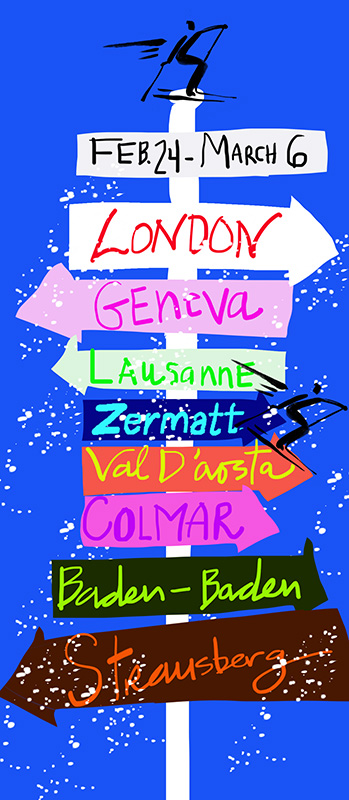
Headed out to just a few places…
Leave a reply

I have a bank, People’s Bank, and it’s about a 5-minute walk from my house. The other night I wandered into the bank as I needed some statements. I ended up chatting with two of the tellers and when I did, I detected an accent. So I asked where they were from. One said she was from Bulgaria, had a Green Card, and was married to a Ukrainian guy. They loved Boston and she was going to apply for US citizenship. She first came here on a J1 Visa for work travel and she fell in love with America. Although she was anxious about it, she wanted to apply for a US passport but new administration policies made her concerned.
The other teller was from Nepal. She had won the lottery pick offered after the tragic earthquake in Katmandhu and she had received a work visa for the USA. They have since discontinued the lottery but she is hopeful that her fiancée will one day get to come here. She was in Kathmandu when the earthquake hit and went a week living out in the open for fear of more tremors. She was so nice and so helpful. Then, out of the blue, the manager came over. He was from Armenia originally, his wife was from Russia, they spoke Russian at home, and loved the USA. Three immigrants loving this place. How naive to have short sightedness on such a fundamental premise of the USA. There is nothing more American than being an immigrant! Travel changes lives.
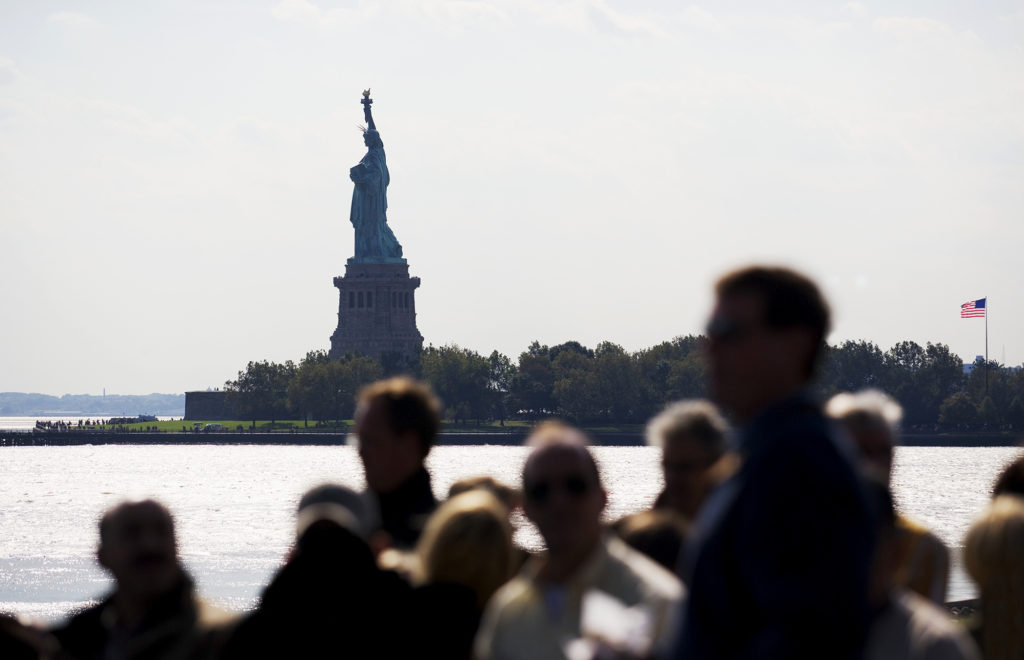
– Image by © Alan Schein




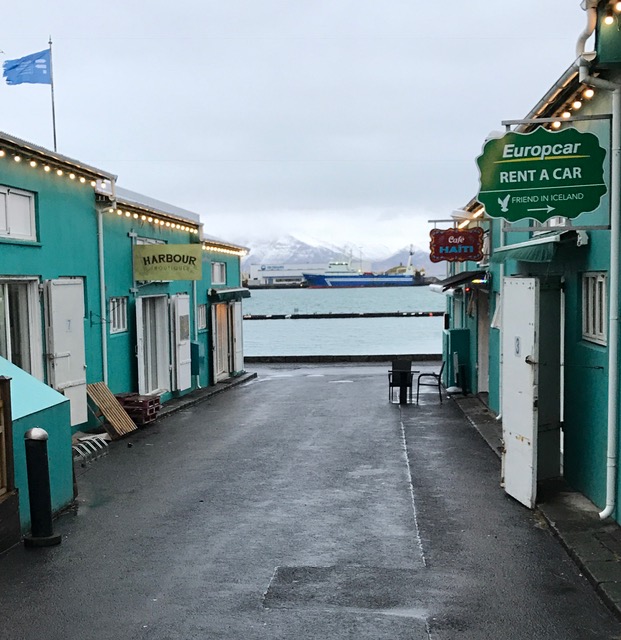 It’s the middle of winter, the snow has just started, the temperature is jumping down into the teens most days in Boston, and the days are desperately short. I know what, let’s go to Iceland for a winter break and get away from it all!! I know it sounds crazy and for sure it cannot match with a one-week getaway in the Caribbean, but in my mind it’s actually better than that. This, after all, is the land that the Vikings populated over 1,000 years ago and a chance for all of us to get a glimpse of where they lived and what Vikings really looked like. Believe me, not much has changed. Iceland has a population of just over 300,000 people. Believe it or not, everybody that you bump into on the street looks like they could have been a Viking or a Viking’s wife, and they all love it here.
The last time I had visited Iceland was a couple of years ago. When I went in July, it was not balmy but the sun literally never set. However, this time I went in the beginning of January. There is barely five hours of daylight, it’s dark when you wake up, and what little light there is disappears soon into the afternoon. Truly, it’s a crazy place to go! But you know what? I loved it.
The arrival morning in Reykjavik was not great. We rented a car but lashing rain and freezing conditions were not inviting. The guy at Hertz thought it would be a bad idea to cancel the reservation even though visibility and my local knowledge were nonexistent. Still I ended up cancelling the car. Good Idea. But we decided to take a cab. Bad idea. $200 later, the meter gave me the nasty news. Recommendation: Never take cabs in Reykjavik. There are bus services everywhere and they are cheap and reliable. Actually, it’s the only thing that is cheap in Iceland!
Reykjavik is a totally different city in the winter. The weather is unpredictable – a blizzard, some rain, freezing conditions, clear skies, it’s got the lot. The museums are great and informative, especially the Settlement Exhibition and Viking World. The food scene in general is terrific with great restaurants and late bookings. Two restaurants I liked were The Fish Market, next to the Centrum Hotel, and The Sjavargrillid Seafood Grill on Skolavoroustigur 14. The bars are lively to say the least. Weekend last calls will outlast all but the intrepid youth; 4 to 5 A.M. and they’re still lining up to get in. There are also several great bars off of the same street that the seafood grill is on. The food scene is dominated by fish, with lots of cod and arctic char, the occasional puffin or reindeer thrown into the mix for those who can deal with it, and a dash of mink whale if you can deal with that also. Juice bars are everywhere and the food is pretty healthy. The two main squares are loaded with things to do and places to see and the harbor is undergoing development with spectacular views across the bay of the snowcapped mountains. There is a real youthful feel to the city.
We did all of the tourist stuff including the Golden Circle tour to see the Geysir, the Gullfoss Waterfalls, and the tectonic plates at Pingvellir. In between, in the brief hours of daylight that we had, there were spectacular views of the faraway mountains and volcanoes. We even saw the northern lights. Yes, we actually went hunting for them with a northern light expert looking for holes in the clouds. There were blizzard conditions and we almost gave up hope when suddenly the clouds moved apart and this dazzling magical light show started. It was like nothing I had ever seen. The Blue Lagoon was fun. We had a reservation at night and it proved to be a clear night with a bright half-moon. Such a spectacular way to hang out before a late night dinner. So in winter there’s actually plenty of things that make Reykjavik a fabulous city to visit for a three-day stay.
Iceland has plenty of unique features. The great news about Iceland is that it’s expensive so there is absolutely nothing to buy. In fact, sometimes the prices border on crazy (hence the crazy taxi fare), but in the restaurants and bars, you can navigate these prices. As most of the excursions are included when you travel to Iceland, you escape the harsh reality of the nasty excursion bill. The Icelandic language is authentic and unchanged from its original Viking days. It is absolutely impossible to understand but everybody speaks English as the kids in school are taught English from the age of four. There is a great sign as you enter the airport. It says that all of Iceland’s electricity comes from renewable energy sources – earth, wind, and fire. So, yeah, they keep the Christmas lights on a little bit longer and the Blue Lagoon is lit up way into the night. But with practically no electricity bill, it’s not an issue. The quality of life in Iceland is at such a high level that practically no one wants to leave over the long-term.
The great thing about Iceland is that each season offers different opportunities. My advice is to go there if you had never been, to return there if you had never been and sample a different season, and if you are a teacher, take your group for a short break or combine it with London. If you are a STEM teacher, there is so much to do and so much to study, that it is probably the greatest outdoor classroom in the world.
P.S. it is not quite as cold as everybody says. In fact, today, in Boston, it is 7° Fahrenheit and it sure did not feel that cold in the Blue Lagoon a few nights ago!
But renting a car and driving into town after the final of the All-Ireland Gaelic Football game that Dublin won is a whole different world. The GPS could navigate me into the center but what it did not tell me was that I had to avoid the remnants of celebration walking randomly in front of me as I drove to the Conrad Dublin Hotel by St. Stephen’s Green. We made it eventually and the hotel was absolutely great. It was party night in Dublin. Not a better place in all of the world.
The drive to Sligo uses a fairly modern highway. We drove out passing the St. James’s Gate and the Guinness Factory, and followed the River Liffey for several miles. We traced peat bogs and at one point intersected with the River Shannon at Roosky before arriving in Sligo about 2.5 hours after departure.
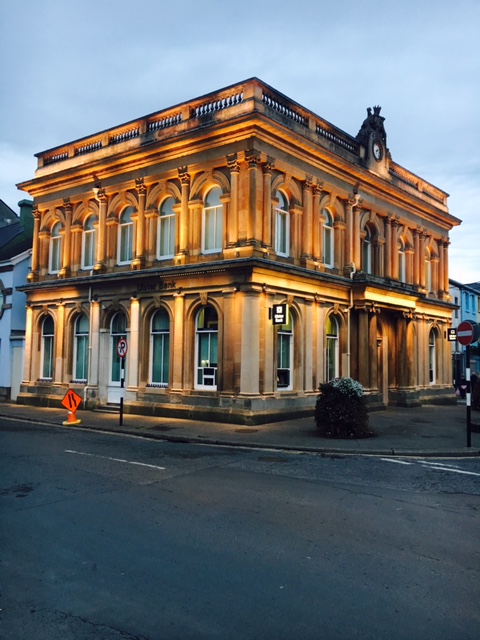
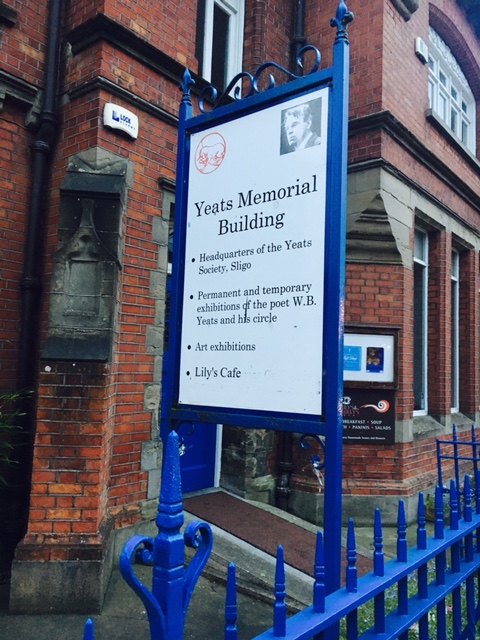
The west of Ireland is truly a magnificent part of this tiny country. Sligo sits in the northwestern part quite close to the Northern Ireland border. The wealth that came to Sligo because of the port trade gave it the Cathedral of John the Baptist whose original foundation was built in the 13th century although it was completed in the 18th century. About 30,000 people emigrated from Sligo during the Great Famine in the 19th century. In the early part of the 20th century, Sligo became a hotbed for Republicanism. Today, Sligo has the feel of an old colonial Garrison town with beautiful stone houses and on the outskirts there are some massive estates. The Sligo area was popular with the British aristocracy even after Partition in 1921.
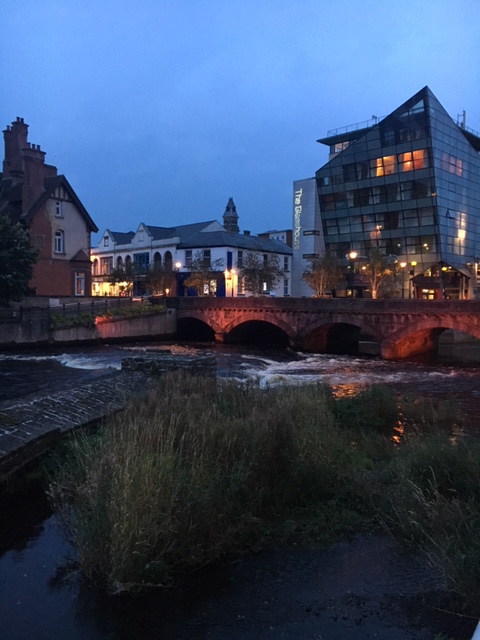
To me, walking through Sligo was a reminder of England in the late 1950’s/early 1960’s; shops were closed on Sunday, family stores, traditional clothing stores, butcher shops, pubs with the patron’s name on it, and tiny terraced houses with barely room to move between the door and the road. Sligo has its beautiful River Garavogue that has created some activity and a bustle of shops and cafes that 15 years ago did not exist.
It is easy to get here from Dublin by rental car, by bus, or a three-hour train service. We stayed at the Glasshouse Hotel which was modest but ample and right on the Hyde Bridge – not fancy but the location was superb and the staff and amenities were brilliant. Sligo is absolutely worthwhile adding to your list.

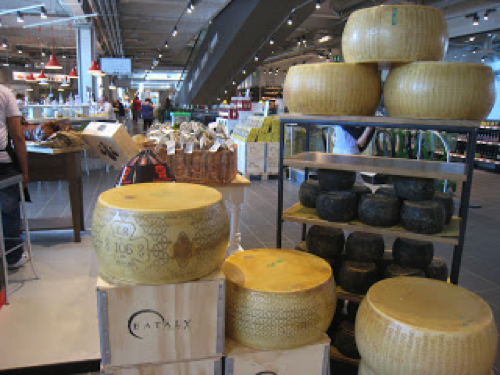
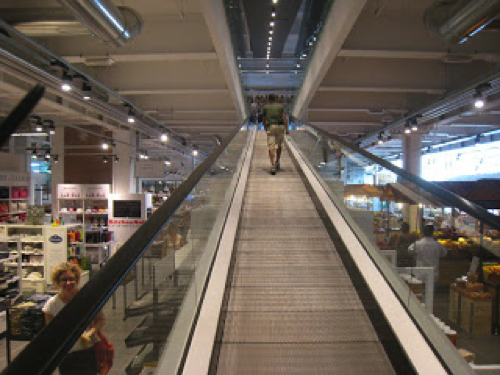
We drove out of Rome past the Protestant Cemetery and stopped to take a look at Eataly.
The building itself was constructed with public funds and opened in 1989 as the air terminal to handle the traffic from the 1990 World Cup. It was designed by the Spanish architect, Julio Lafuente, and is a very retro building that easily could have been designed in 1960’s. From the beginning, nobody could find taxis (in those days it was in the middle of nowhere) and it was not easy to cart luggage from the nearby Ostiense train station across to the air terminal. Ultimately it was abandoned and remained empty for years until it was purchased for not a lot by the financiers of Eataly. What luck that Eataly picked up on this slightly dilapidated post-modern structure!
For me, I would rather do my shopping in the Campo di Fiore but I shouldn’t knock it – Eataly is coming to Boston and opening in the next few weeks. Just imagine, wheels of parmesan, hocks of prosciutto, pasta from every region, restaurants and shops galore, and all within walking distance of my house! I’ll take that any day.
After a scattering of fairly dull seaside places, we eventually got to Anzio where the allies landed in 1944. It is a fairly unmemorable town but there is the haunting Sicily-Rome American Cemetery and Memorial there which we visited.
This is the Martha’s Vineyard of the Roman World. Ponza is one of six islands in an archipelago that sits a short distance from the Italian mainland. We carried on our journey and the landscape brightened up quite a bit.
We eventually ran into a lovely town called Sperlonga only about one hour outside of Rome. Sperlonga is probably the nicest, closest resort to Rome. There are lots of stabilimenti, beachside restaurants and cafes, and the climb up to the top of the town is lovely. It may not be a Greek village like Symi but after all, you are only an hour away from Rome.
We were halfway to Naples and after a delightful spaghetti alle vongole everything went downhill fast. Trash started to pop up everywhere. The trash collection services in most of these southern coastal towns gave up long ago. We were in Mafia country now. There are 4,000 deaths every year around this part of the world.
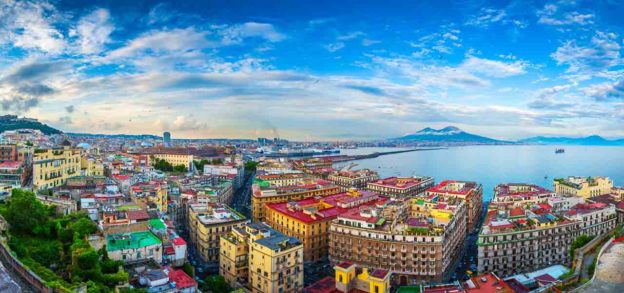
The traffic was starting to build up as we moved into Naples proper and we had some time to get off and head into the center. Many people get nervous about Naples but I actually love it. It has great restaurants, beautiful architecture, and with its location facing the island of Ischia and only 45 minutes’ drive from Sorrento, it becomes a tempting place to stay. However, you have to be careful and mindful of all of the usual city stuff in the evening. We were moving on pretty quickly and picked up the small road that takes you literally through the Bay of Naples and into the town of Sorrento. We were nearly there.
So if you had to choose a place in all of Italy to hang out for a few days in super-luxury, relatively car-free, and using a boat to access restaurants and islands nearby, where would you choose?
Positano is one of those rare places that you find that has just about everything with some gorgeous hotels (Le Sirenuse and Hotel Covo dei Saraceni) and some very cool restaurants that you either have to walk along the cliffs to or rent a private boat to access. Positano has a constant flow of ferry traffic as it serves all the way through the end of September as a main jumping off point for tourists from Sorrento and a jumping on point for tourists to get to the island of Capri. The beach is typical of this area – stony with plenty of stabilimenti. The water is clear although it is good to stay inside of the swimming lanes because of the boat traffic.
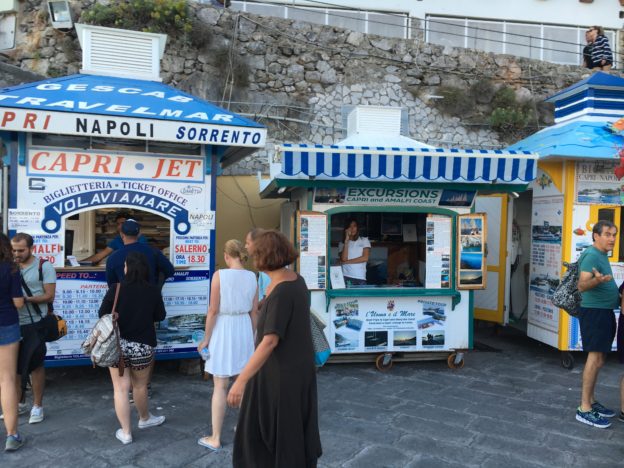
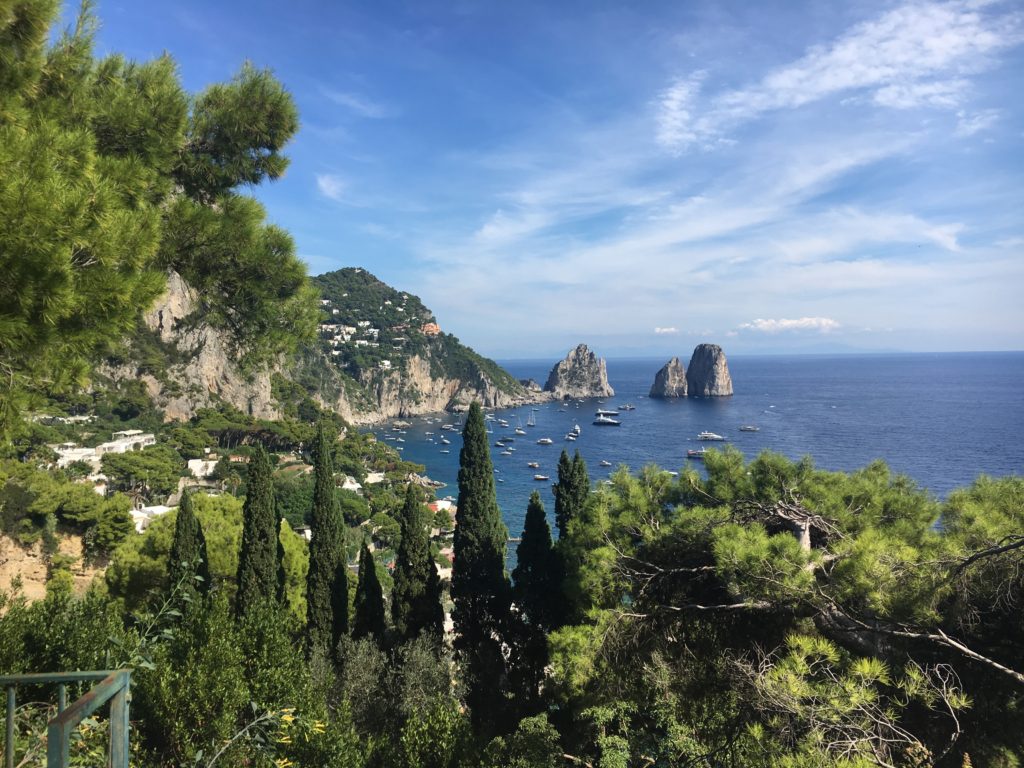
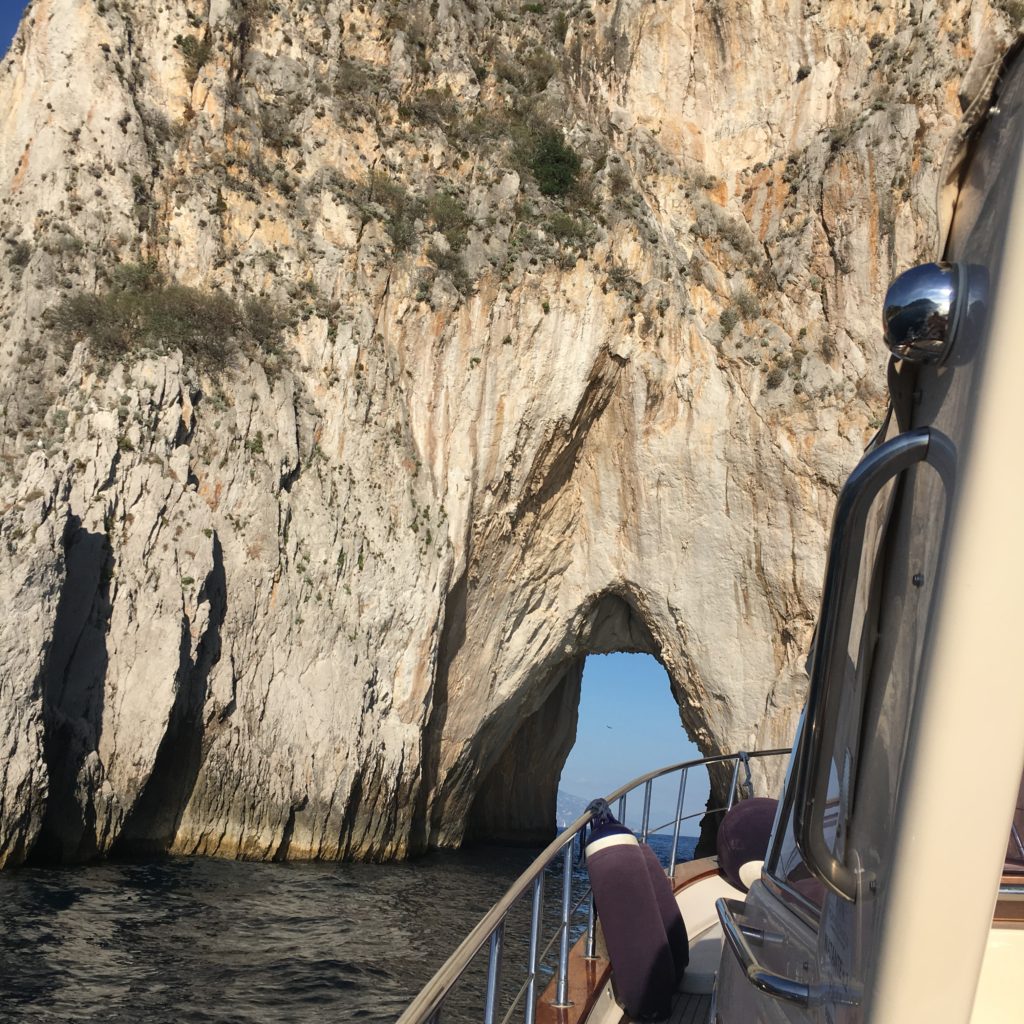
I had not been to Capri for more than 30 years so we rented a boat and sailed clear around the island. We landed at the Marina Grande and went to the Marina Piccola for a swim.
It was good to go but it was crowded and the wait on the funicular was not worth it. The cab drivers all seemed to be satiated for business. To make it worse, the water was choppy so the famous Blue Grotto was not available. One thing’s for sure, Capri is beautiful but no Greek island.
The colorful houses as they sit along the horseshoe cliff face are like no other in the world. The smell of lemons in the lemon groves pervade this place. The fact that you can buy fresh mozzarella di bufala makes this one of the great wonderlands of Italian cuisine. It’s expensive, it’s trendy, it’s glitzy, and it’s a bit of a hassle to get to, but honestly, for three or four days at least once in your life, you should give yourself up to Positano. Tom Brady did while he was sitting out his four games for Deflategate. My only regret was that I didn’t bump into Gisele while taking my morning cappuccino. We were there at the same time!


The good news for travelers is that the British pound continues to sink, products that we buy in the UK are as cheap as chips, and sadly for my mum, the average cost of a glass of sangria in Spain just went up by around 20%. But that is not the end of it and lines have to be drawn.
Apparently the makers of Marmite, the mega monopoly, Unilever, have decided to pull back some of the lost profitability of the falling pound and increase the price of our beloved product.
For the American tourists, there is good news of course in all of this. Americans traditionally loathe the taste of Marmite, a black, sticky, glue-like yeast extract that Brits have been brought up on since they discovered what to do with the waste from brewing beer. In Australia they call it Vegemite and it tastes the same.
It’s the stuff that we were raised on.
Now the beloved brand itself is merely a pawn in the gain of the Brexit politicians who promised a different world but in actual fact delivered a depressed currency, higher prices, more unemployment, and good news, an opportunity for Americans and Europeans to take advantage of a strong dollar and euro.
Image courtesy of https://twitter.com/mnchstrdesign/status/706414679686561793

What already took place in Europe with Ryan Air and easyJet, and moved subtly across to the domestic arena in the USA with Southwest and Spirit, is now happily making an impact on the transatlantic flight.
While they are not impacting the big boys yet, this could be the start of a new Freddie Laker revolution. And what to do to respond to a market trend of low-cost long-haul flights? How do you retool your factory and make your product more efficient, less expensive, and less dependent upon goliath overhead drain than the big three consolidators?
Been there, done there. That…did not work.
The emergence of the low-cost flights–long-haul flights–has come at a time when oil is cheap. Airlines are starting to make money by pairing down the size of their fleets, using more fuel efficient planes, and charging higher prices to get us from A to B. So who is trying to break up this party?
A recently purchased Norwegian Air ticket from Copenhagen to Boston costs $180 one-way. Other carriers like Canada’s WestJet Airlines and Iceland’s WOW Air are offering prices that are half of what the competitors charge. Furthermore, they are providing a business class option at a tenth of the price of the rip-off business class ticket that you are charged with the top transatlantic airlines. Norwegian operates on 26 routes and on those routes, its share is a staggering 13%. JetBlue is starting to feel that they can make a move in this market too and Southwest is also making noises.
Because the USA and EU have an open skies aviation treaty, carriers can charge what they like which used to spell bad news for the consumer. However, with the low-cost guys, it is completely consumer-driven. This is a big chunk of market to grab. Put a fuel efficient Dreamliner on a route between New York and London and charge $350 roundtrip with a $650 business class option and you are likely going to get takers and more importantly converts. We have all seen how absolutely useless a bunch of points or a loyalty club can be when you really need them. If the low-cost carriers can provide comfort, good legroom, a fun experience on the plane, and all at relatively inexpensive prices, I think that this is just a growing market.
What kind of market is this and who controls what? Delta and United control about 13% of transatlantic traffic, American and British is around 10%, Lufthansa is 7%, but there is a staggering 40% that is up for grabs. The discounters have smelled the prey. The CEO of Norwegian intends to add more flights from more USA cities to more European cities. He claims that ticket prices will be less than $100 one-way. I’m putting my money right now on Norwegian – they fly nonstop, the food is as good as any of the other carriers, they fly the Dreamliner, and they provide super value in two classes of services.
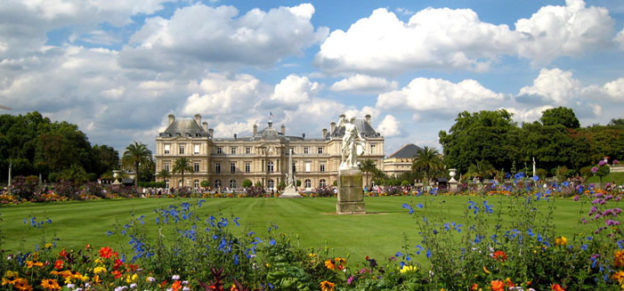
Lately I have been staying at the Belle Juliette on the Rue du Cherche-Midi which interestingly enough is a fabulous French phrase that my Parisian friend, Claire, explained to me. To “chercher midi à quatorze heures” means to complicate things.
From this delightful 4-star boutique hotel with a lovely garden, it’s a short walk past antique stores and tiny cafes to the Luxembourg Gardens.
A run around the perimeter inside of the gardens is just under two miles. The surface is pleasant, the people watching is amazing, the flora and the fauna is over the top and you can barely believe you are smack in the center of the Latin Quarter.
The gardens are jammed between the Boulevard Saint-Michel and Sorbonne area, the Odéon and the Saint-Sulpice, and the longest road in Paris, the Rue du Vaugirard. In the center of the gardens, there are beautiful clay tennis courts that are not terribly busy, donkey rides, petanque games, and a scattering of benches that are used for exercise. In between all of this there is a beautiful pond where children can rent miniature sail boats. There is a kids swimming pool that is sometimes taken over by adults that should know better. There is a plethora of olive green chairs scattered everywhere for people to sit, read, and enjoy what has been there for centuries. There are apple trees, oleander trees, and a miniature model of the Statue of Liberty. Ironically in the Luxembourg Gardens there is not a lot of grass and most grass is protected by signs telling you to stay off of it.
Paris takes your breath away again.
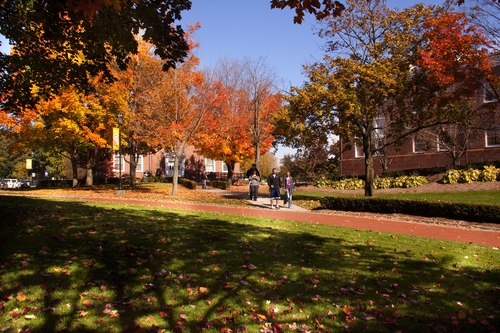
Summer is over. From my point of view, it finished around the middle of August when I couldn’t get a Sam Adams Summer Ale and the guy told me that they were only selling Sam Adams Octoberfest. Are you kidding me? I thought summer was defined through the summer solstice and the beginning of the school year, not the sale cycle of summer ales and availability in bars
Approximately 250,000 students descend upon us between the end of August and the beginning of September, marking the transition from summer to fall. Back to school.
Did Tom really deflate his balls? I don’t think so. In fact, nobody in Boston thinks so. That is just a horrible conspiracy constructed by the rest of the world against our Tom.
So how does our city shape up and gear up for the influx of youth? Even though the drinking age in the USA is 21 years old, it does not seem to stop the invasion of students into the sports bars around the city. Let’s face it, if you are a Boston fan then there are plenty of sports to cheer about. Hockey season is not far away and basketball starts in November. For those of us who love the game of soccer, well, soccer kicks into high gear come the month of September. The English Premier League is carried live in sports bars all over America along with the Spanish league, La Liga, and Serie A. In other words, there are more sports bars and sports to watch on TV than ever before.
The best sports bars in Boston have to be McGann’s Irish Pub in the downtown area near the Boston TD Garden, LIR, a great Irish bar close to the Prudential Center, Cornwall’s in Kenmore Square, one of my favorite English pubs, Jerry Remy’s in the new trendy Seaport area, and the famous Cask’n Flagon down in good old Kenmore Square right next to Fenway Park.
When I travel internationally, the first thing I do is look for an Irish bar. My favorites in Rome are the Abbey Theatre just off of the Piazza Navona on the Via del Governo Vecchio and Scholars Lounge along the Via del Plebiscito. Scholars stays open until 3:00 am and is the best place to watch American football games that start late. The funny thing is that London is not quite as hip as the other European cities. It’s either soccer or suck it in which is a drag because American sports fill the void between the end of the soccer game and 2:00 am. If the patrons are watching, they are probably drinking and someone is making money.
Just my perspective, no bias intended! Got to love the fall.
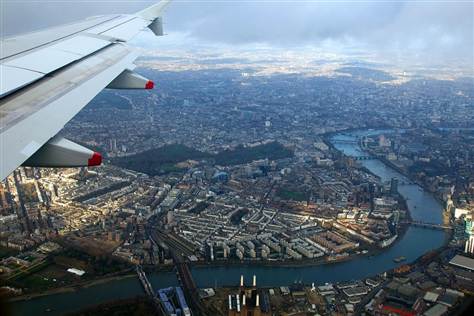
Nowadays though I tend to see it more as a tourist and probably enjoy a lot more of the sights than I ever would if I lived there. Usually when I fly transatlantic to London, the flight pattern follows the western parts of the city and picks up the Thames just around the airport area close to Windsor, Eton, and Runnymede where the Magna Carta was signed in 1215. Sometimes, if you sit in a holding pattern low enough, you get a wonderful tour of the city center before making final landing.
But the other day the flight pattern coming from another European city was decidedly different.
It was a sight to behold. We passed over the mouth of the Thames where Dover sole fish farms ply their trade and eels are caught for the English delicacy of…horror upon horrors, jellied eels.
Literally we seemed to trace the old docklands which had been replaced by brand new developments around Canary Wharf, past The O2, and over the Emirates gondola before we started to get into the new city development – the skyscrapers with funky names like the Gherkin, the Shard, and the Walkie Talkie. This was the new London and we were flying above it at around 20,000 feet. The pilot seemed to be enjoying the view as much as we did and he made a couple of announcements pointing to the developments on the river below.
It was strange to see old London squeezed in between the skyscrapers and the ancient river below. There was the tiny-looking Tower of London and the omnipresent Tower Bridge, London’s iconic and still used drawbridge. Everybody in the plane, whatever side you were looking at, had a treat to behold. St. Paul’s Cathedral was on the right, the Tate Modern on the left, and the London Eye straight ahead…did I miss 12th century Southwark Cathedral in the middle of it all? We passed Westminster, Big Ben, the Houses of Parliament, and Lambeth Palace, just a stone’s throw from where I grew up, and still we kept on following the Thames.
As we started to run out of sights, the plane banked slightly and we caught a glimpse of Hyde Park and Buckingham Palace.
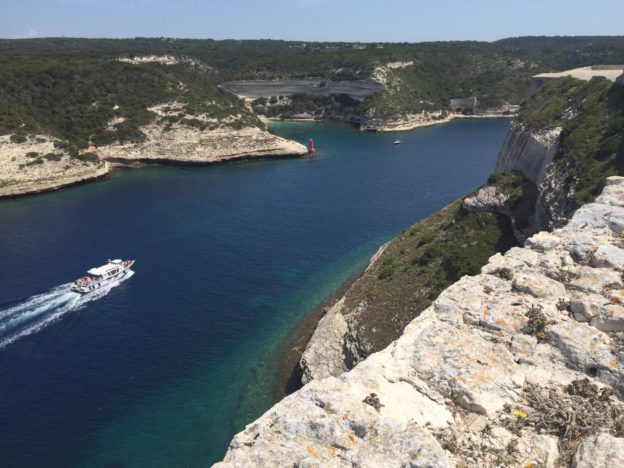
But there are times to visit the Mediterranean and there are places during those times that remain relatively untouched by the scourge of modern tourism.
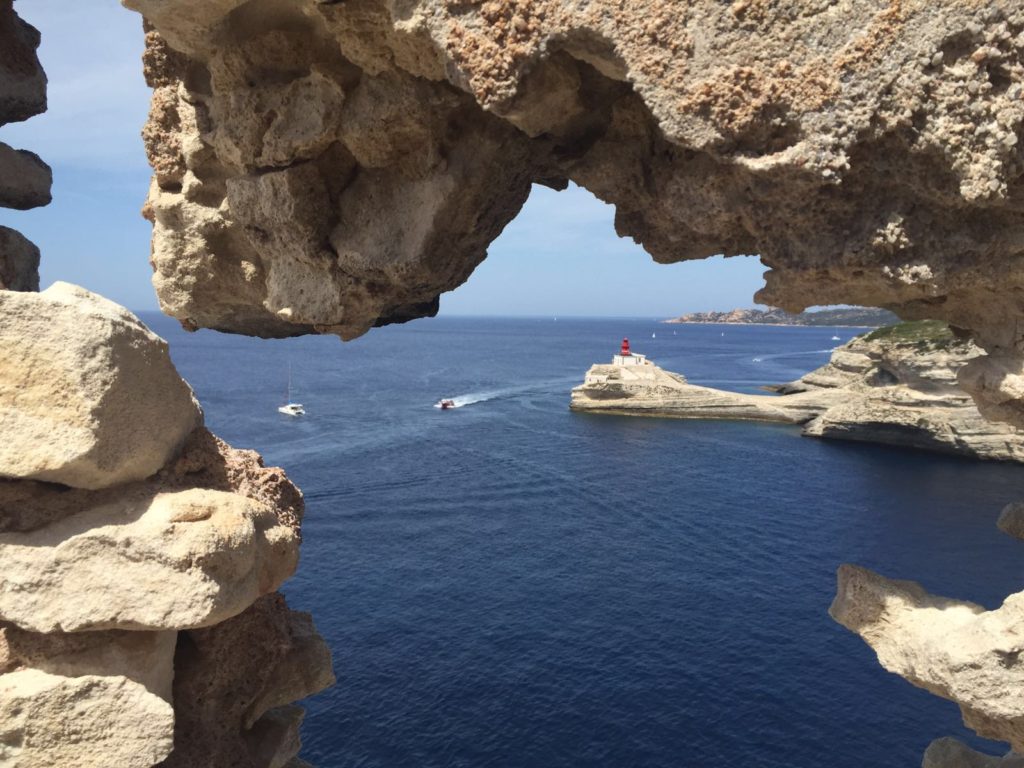
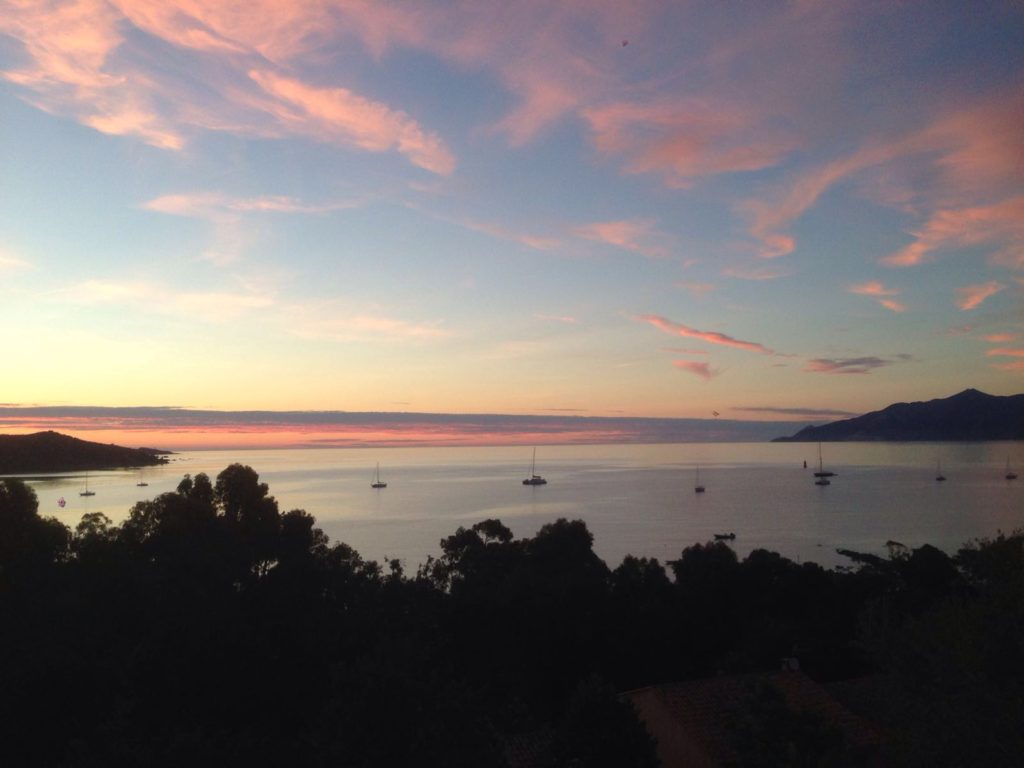
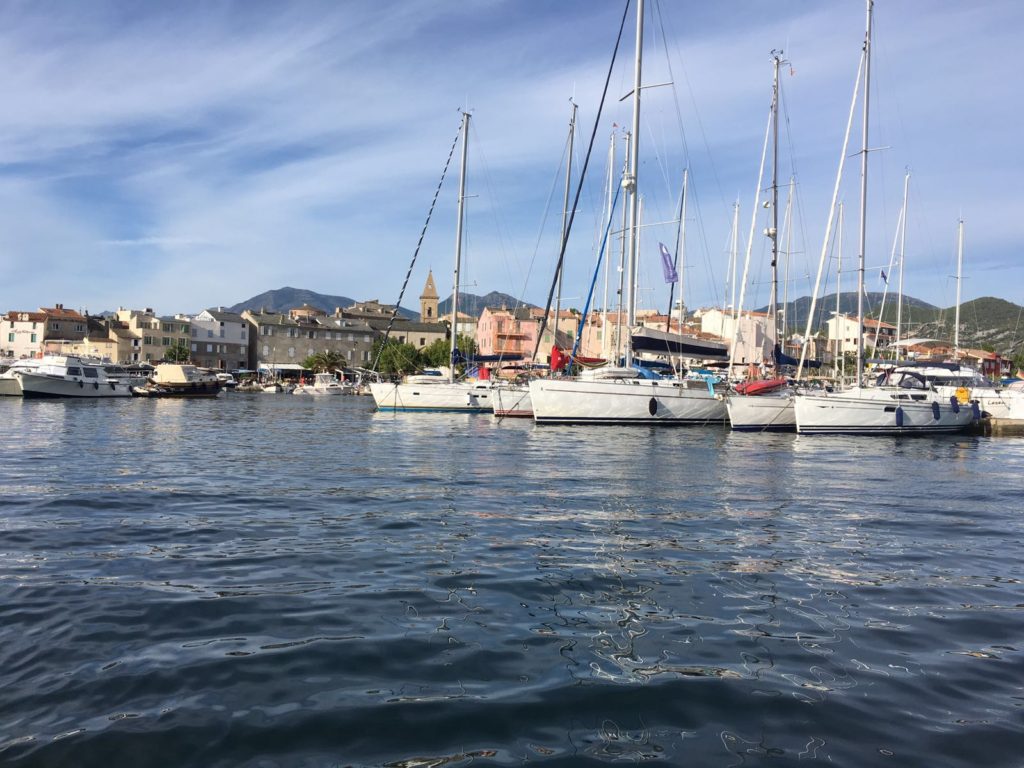
One hour from Paris by plane or a slow boat from Marseilles will get you to this magical island that sits just off of the coast of southern France, west of the Italian peninsula, and north of the island of Sardinia. I made the most delightful wrong turn upon arrival in the airport and what should have been a 35-minute drive to the picturesque town of Saint-Florent, turned out with my GPS to be a two-and-a-half-hour journey through the hinterland, climbing mountain tops, and going through several weather changes, on my way back to, as it turns out, the airport!
But we covered mountain passes, pig farms, delightful stone villages, and oodles of bougainvillea that acted as hedge rose.
Driving was a little dicey but with my stick shift knowledge I was able to navigate some treacherous climbs and take a few stops to grab some time to take in the scenery. The scenery in this mountainous island was spectacular. Even in June there were 8,500 foot peaks of snowcapped mountains peering down across the turquoise Mediterranean Sea.
Eventually we picked up the road that we had ought to have picked up on the drive from the airport and started all over again. As it turns out, the confusion was because the sign for Saint-Florent had been crossed out by some angry Corsican separatists which left only the sign in Corsican that looked completely different.
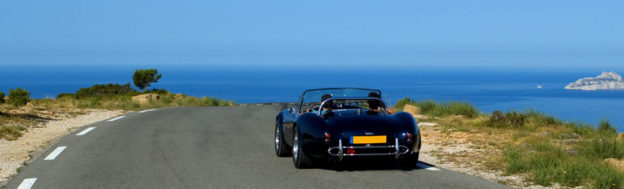
First of all – the insurance. Call your credit card company and make sure what you think is insured is insured. The cost of a rental car can literally double per day if you take the rental car’s suggested insurance options. Your credit card should cover you for all of the insurance that you need. But there is a catch – the credit card company is simply going to back up your own insurance if there is a problem. Thus, if you have an accident overseas, the credit card company will first go to your USA auto insurance policy and look for the coverage there. If they cannot find it, then they will back you up. But it’s not certain, it’s complicated, it’s time consuming, and as always, it is simply designed as a way for insurance companies to avoid the risk of something happening. It’s sort of like the ad, they cover for zombie invasion but an accident in a car may not be covered by your insurance! So when travelling overseas, just make sure that that is sealed tight.
It’s another way for rental car companies to screw the living daylights out of you.
To begin with, do not be fooled because you never see a cop parked in a hidden driveway or somebody staring at you with the speed gun. In Europe it is all done with cameras and as soon as the camera catches you speeding and flashes, you’re done. What that means is that there is no 10 mph forgiveness zone that most of the time is granted in the USA. If you are traveling at 66 km/h in a 60 km/h limit, the speed camera will go off. You’ve been caught on camera. Eventually that fine will make its way to the rental company and the rental company eventually will hit you with that ticket with extra surcharges because obviously it’s late in payment. Fines can be high and rental car companies do not provide information about this. Europeans are very aware of the cameras and in France, the UK, and Italy there are cameras everywhere.
Good news is that the speed cameras have lowered the average speed of drivers and have saved thousands of lives. The bad news is that it is a source of revenue for the local authorities. Same with parking tickets. What used to be easy with a rental car is not so easy anymore. The fine will eventually get back to you with late surcharges and you could end up with a bill on your credit card from the rental agencies up to one year later (which they are allowed to do). Just because the Europeans have a higher speed limit than the USA, it doesn’t mean you can speed like the old days. You will pay for it one way or another.
Image courtesy of http://www.theaa.com/motoring_advice/overseas/.
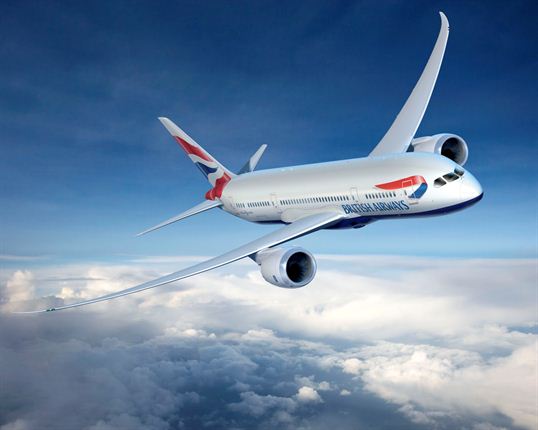
You can work through the day on the plane, arrive looking roughly the same as when you left, and get to enjoy a great meal in London before you begin your journey. Or better still, grab a hotel night at the incredibly convenient Sofitel that is situated at Terminal 5 at Heathrow. This hotel is a dream especially if your onward connection the following day is on British Airways and therefore in Terminal 5.
The flight time from Boston is 5 hours and 50 minutes and while it is not recommendable for people who are trying to save a hotel night by sleeping on an airplane seat, the difference in a healthy travel experience and a somewhat acceptable looking human being emerging from the plane is well worth it. The great news is that during the summer months you can connect all the way through to Paris (if you are a BA fan) or to more exotic places like Palma in Mallorca (I’m a big fan).
At that point it is still only 7pm in the evening on Boston time. True confession: I am a secret addict of the day flight.