
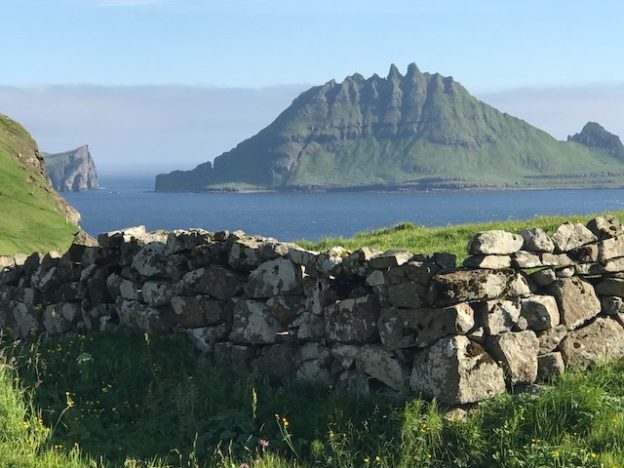
When I was a kid in the UK, I used to listen to the shipping forecast on the radio late at night. It felt cozy and reassuring when I was tucked in my bed and thinking of all these ships bobbing around in the harsh waters around the northern parts of the UK and beyond. It has become quite a famous institution in fact. At the London Olympics it was played along with Elgar’s Nimrod to denote Britain’s maritime heritage. There were updates of mysterious places like Tyne, Dogger, German Bight, Fair Isle and the Faroe Islands. I had no idea where most of these places were but like most youngsters in the UK, it became part of every Brits upbringing and it still beams out across the air waves today. This summer I decided to go visit one of these places; The Faroes. I had never been and had not much of a clue exactly where it was.
Getting there is not easy. Perched between the Outer Hebrides and the southeast tip of Iceland in the inhospitable waters of the Atlantic ocean, there is no direct service from London or many other European gateways. You can fly quite conveniently from Copenhagen or Reykjavik on SAS or Air Atlantic (the Faroe national carrier). We chose SAS and that was probably our first mistake in trying to get there.
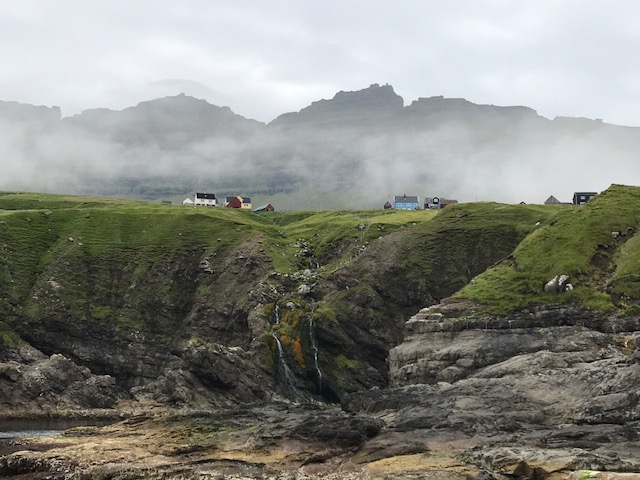
It’s a two hour and 30-minute journey from Copenhagen. The runway at Vágar Airport in the Faroe Islands is small. It was a cloudy day and when we finally arrived, after some delay, the pilot felt encouraged to make his descent. But the cloud cover ultimately was too much for him. As we descended, I felt the surge of the engines as he pulled out of the landing. After circling above for 10 minutes, he informed us he would have to go back to Copenhagen.
Yes, that really did happen.
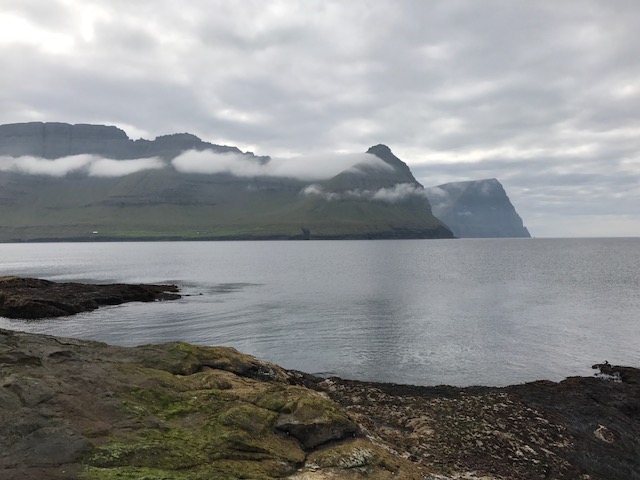
According to the locals, only travel on Air Atlantic as the Faroe pilots know how to land in cloud cover on a short runway. That was advice I wish I had earlier!
The next day we tried again. The weather was much better and the views were spectacular. As we descended, the archipelago of 18 islands suddenly appeared as we dropped onto what seemed to be a 50 yard runway that is cut into the edge of a steep cliff. We had made it and so the adventure began.





 With the melting pot of a new administration, Trump travel paranoia, anticipated holdups in immigration entering the USA, and a strong dollar, international travel inbound to the USA has decreased. Add to that there is an increased likelihood of the laptop ban in the Middle East countries being expanded into other countries and the USA as a destination starts to feel the pinch in terms of dollars.
 and consumers are benefiting across the international skies. There are phenomenal deals on Turkish Airlines at the moment if you are willing to go that route. Turkish is one of the largest airlines in the world with feeder flights across the European landscape. Good news for Europeans is that in spite of the recent terrorist incidents, London reports strong traffic and Athens, perceived safe, is up by a whopping 41%. So the Americans are on the move but the Euros are staying put. In the Caribbean and Central America, Zika is still a massive negative for young families. Bottom line is that there are deals to be had, places to go, and people to see. It’s time to leave the house and go through the garden gate.



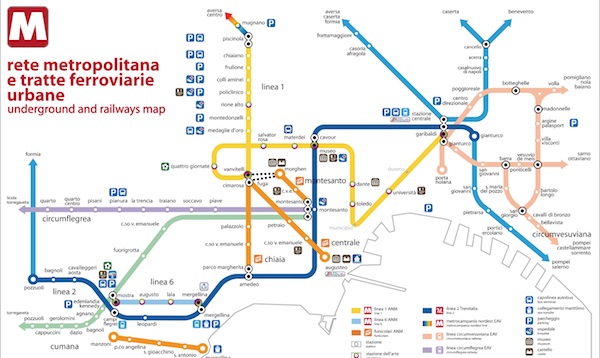
 I’m not a big fan of the Rome Metro but I was persuaded by my Italian friend that the Naples one is just about the best in Italy. So I decided to take a chance. To start, there is the usual Italian problem of any Metro entrance – where do you buy a ticket?! It’s a struggle. The ticket machine does not work, the guy that has the booth by the entrance does not sell them, and the woman at
  the top where the newsstand is wasn’t there. After five minutes of inquiry, we discovered a shop where you could buy these train tickets. I guess Neapolitans have season tickets or something but it sure was a bit of a struggle to figure out how to get on the train. Once down in the dungeon of the Metro though, it all looked
 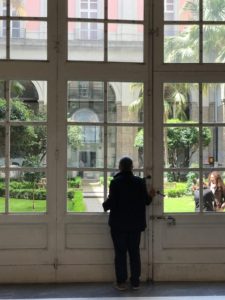 pretty cool. The trains were clean, it was highly logical, and unlike the chaos of the streets above, the metro had a quiet sense to it. We were able to travel clear across town with ease. Sure, the Metro map was a little graffitied up and maybe some of
 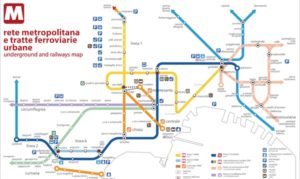 the posters were a bit too raunchy for some tourists, but the trains were perfect. I quite liked the idea that Helmut Newton photographs were being advertised here and exhibited at a palazzo nearby.
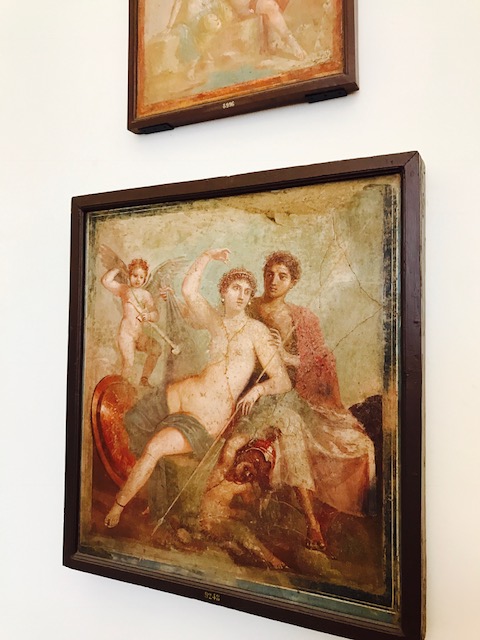
 Not far away from the nativity street is the entrance to the National Archaeological Museum right on the edge of the Centro Storico. Here there are lots of statues and art that easily rival or outperform anything to be found in the British Museum, the Louvre, or the Vatican. These are the great marble collections of ancient Rome, Pompeii, and Herculaneum. However, the main draw for me
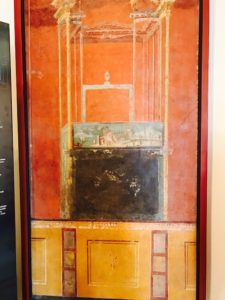
 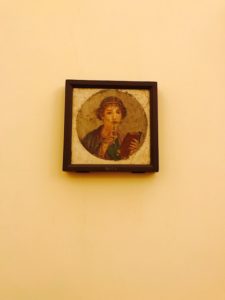 was that this is the only place in the world where you can actually see the artwork paintings of Pompeii. They are still as beautiful as if they had been painted on a wall only a few years ago. This is where you get to see the people, the backdrop, the landscape, and how
 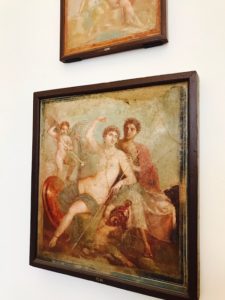 people dressed in Pompeii. The most iconic fresco in the room is the “Woman with Wax Tablets and Stylus” also called “Sappho.” I wanted to stare at her forever. If you have never been to this museum, jump on a train and enlighten yourself. It’s a mindblower.
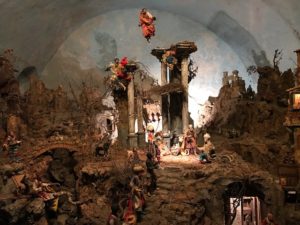 but had to stop along the Via San Gregorio Armeno to check out the pedestrian street laden with a combination of kitsch nativity scenes and the real stuff. They’re called presepe which essentially means “a crib.”
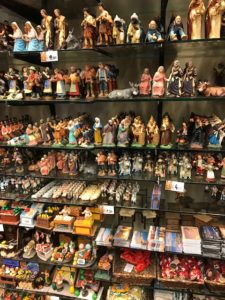 of them have intricate waterfalls and the possibilities to extend across the room like train sets. The price ranges from the basic model for 50 Euros to over 10,000 Euros for elaborate ones. But for Italy, it is not just Jesus, Mary, and Joseph in these scenes, there is a whole hobbit village created around the manger with trees, vegetation, waterfalls, windmills, you
 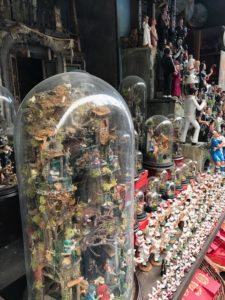 name it. They can be made of terracotta, wood, and cardboard. Even my communist friends have a presepe! But to note, Jesus is always the last to enter the scene and is only placed in the manger on Christmas Eve.
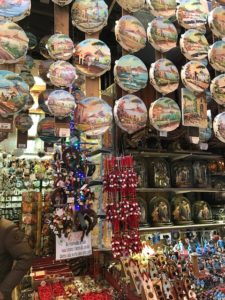 out close by. Neapolitans love football more than anything so why shouldn’t they incorporate their most famous (albeit an Argentinian) into their presepe tradition?! Onwards and upwards to the National Archaeological Museum I went.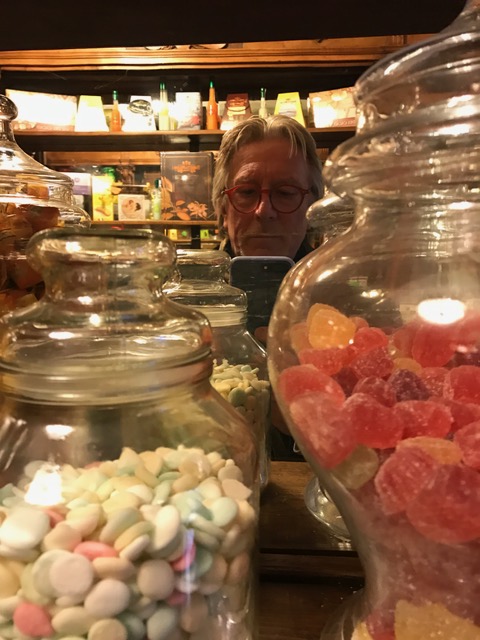
 stroll from the station and around the city for about two hours before heading back to Rome. It was interesting but I really didn’t get a sense of the city. Now we have a client that I know that would like to go to Naples but the rap on the city is that it has a lot of petty crime. So off I went with my man bag in hand for a virgin overnight in Naples.
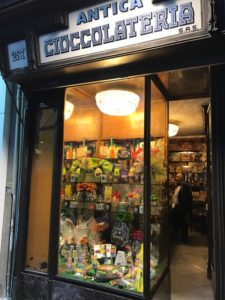 Here’s the thing about Naples – it’s handy to know your way around, there are lots of hills, it’s a chaotic, and there are lots of different areas with very different characteristics. The first stop was the Palazzo Mannajuolo which holds an incredible staircase; probably the most breathtaking internal staircase in all the world, la scala ellittica. We strolled around the hilly Chiaia and stopped at an old-world candy store in San Ferdinando. We came across a beautiful piazza with the pantheon-like structure of the church of San Ferdinando. The piazza here is open and full of light with Vesuvius in the background. The opera house, Teatro di San Carlo, was showing La Traviata. There is a spectacular galleria, the Galleria Umberto I, close by as well. It houses thousands of panes of glass sitting in a cross formation with a whole series of panels of Jewish stars that form part of the glass decoration. The history of Naples is more or less the entire history of the our ancient civilization. One thing’s for sure, it makes Rome look like a young lad.